
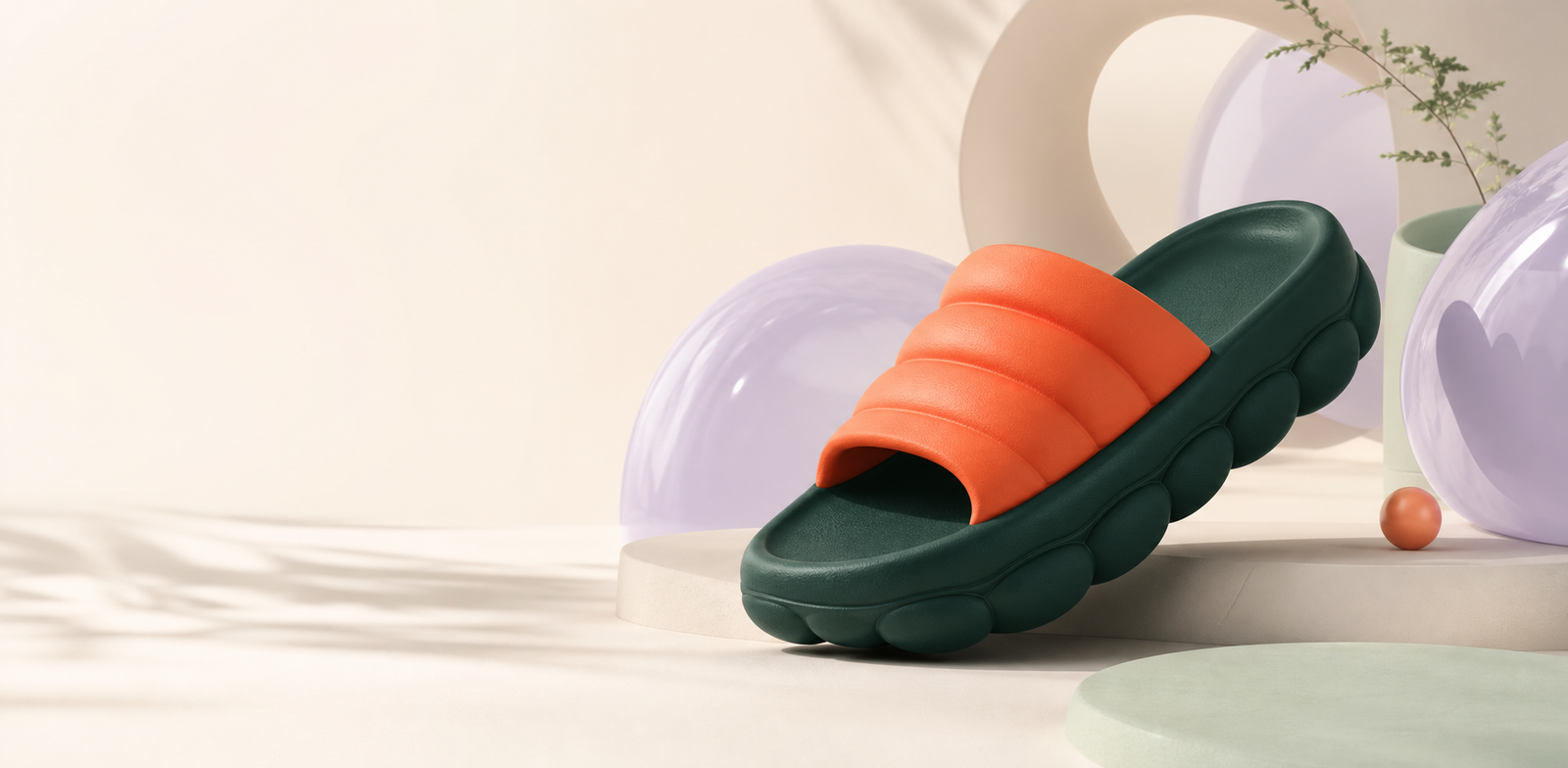
How to Clean Any Type of Slipper or Slide — Material-by-Material Guide
Washing slippers wrong ruins the foam and breaks the adhesive. Here’s exactly how to clean EVA, memory foam, sheepskin, knitted, and rubber-soled slippers without destroying them.
Meta description: Washing slippers wrong ruins the foam and breaks the adhesive. Here’s exactly how to clean EVA, memory foam, sheepskin, knitted, and rubber-soled slippers without destroying them.
Target URL: /guides/how-to-clean-slippers/ Category: Guides Read time: ~7 min Last updated: June 2026
Independent, reader-supported reviews. Some links may earn us a commission. How we stay unbiased ↗
Most slipper cleaning advice online is either dangerously vague (“just pop them in the wash!”) or overly cautious (“hand wash only in cold water forever”). The reality is that the right cleaning method depends heavily on what your slippers are made of. Getting this wrong can destroy the foam, shrink the lining, or dissolve the adhesive that holds the sole to the upper.
This guide covers every major slipper and slide material with specific, tested instructions.
Before You Clean: Identify Your Material
Check the tag on your slippers. Most manufacturers include material information and washing instructions. If the tag is worn away or missing, use this quick-identification guide:
- Foam slides (uniform construction, no lining): EVA or rubber, can handle water
- Plush/fleece-lined slippers: Usually polyester or acrylic lining over foam — water-sensitive
- Suede or sheepskin exterior: Requires specialist care, no water
- Knitted upper (like a sock slipper): Usually machine-washable but check first
- Memory foam footbed (squishy, slow-recovery feel): Water-sensitive, avoid soaking
- Rubber outsole with fabric upper: Mixed — the rubber is fine, the fabric may not be
EVA Foam Slides and Bubble Slides
Materials: Solid or hollow EVA foam, often one-piece construction. This includes bubble slides, recovery slides, and most open-toe slides.
The good news: EVA is waterproof and doesn’t degrade from water contact. You can clean these properly.
Method: 1. Fill a basin with warm (not hot) water and a small amount of dish soap or mild laundry detergent. 2. Use a soft brush (an old toothbrush works well) or sponge to scrub the entire surface — sole, footbed, and upper. 3. Pay particular attention to the footbed where skin oils and dead skin cells accumulate, and the textured areas of bubble slides where dirt traps. 4. Rinse thoroughly under running water. 5. Pat dry with a towel, then leave to air dry in a well-ventilated area away from direct heat.
Avoid: – Hot water — can slightly warp EVA or loosen adhesive – Machine washing — the tumbling action can crack or deform the foam – Direct sunlight for drying — can yellow and degrade EVA over time – Bleach — can damage the foam compound and cause discolouration
For odour specifically: Make a paste of baking soda and water, apply to the footbed, leave for 30 minutes, then scrub off and rinse. This is more effective for odour removal than soap alone.
Memory Foam Slippers
Materials: Viscoelastic foam footbed, usually with a plush lining and fabric or suede upper.
The challenge: Memory foam is an open-cell foam — it absorbs liquids readily. Getting it thoroughly wet means slow drying that can cause mould growth inside the foam. Machine washing almost always ruins the foam structure.
Method: 1. Remove any detachable insoles if possible (some memory foam slippers have removable footbeds — clean these separately). 2. Spot clean the upper with a damp cloth and a tiny amount of mild detergent. Don’t saturate. 3. For the footbed, mix a solution of equal parts white vinegar and water in a spray bottle. Lightly mist the footbed surface. 4. Blot (don’t rub) with a clean cloth. 5. Sprinkle baking soda over the footbed to absorb moisture and odour. Leave overnight. 6. Shake or vacuum out the baking soda the next day. 7. Allow to air dry completely before wearing — at least 6–8 hours, longer in humid conditions.
For the lining: Most plush linings can be spot-cleaned with a damp cloth. If the lining is removable, check the label — some are machine-washable on a delicate cycle in a mesh laundry bag.
Avoid: – Soaking or submerging in water – Machine washing – Tumble drying – Putting memory foam near any heat source — it can melt or deform
Sheepskin and Genuine Wool Slippers (Ugg-Style)
Materials: Genuine or synthetic sheepskin lining, suede or leather exterior, EVA or rubber outsole.
The challenge: Suede and sheepskin are both highly water-sensitive. Water causes suede to stiffen and change texture, and can cause genuine sheepskin to mat and lose its loft.
Method: 1. Brush the exterior gently with a suede brush to remove surface dirt. Always brush in one direction. 2. For stains on the exterior: use a dedicated suede cleaner (most brands sell their own — Ugg’s cleaner works on any sheepskin slipper). Apply with a damp sponge, work into the stain gently, and wipe clean with a damp cloth. 3. For the interior sheepskin: sprinkle baking soda inside, leave for a few hours, then tap out. 4. For persistent interior odour: lightly mist with a 50/50 vinegar-water solution, allow to penetrate, then stuff with newspaper to maintain shape while drying. 5. Allow to dry at room temperature, away from heat. 6. Once dry, brush the exterior suede back to restore the nap.
After cleaning: Apply a suede protector spray once dry. This is the single most effective way to prevent future staining and water damage.
Avoid: – Any machine washing — will ruin sheepskin and suede – Submerging in water – Heat drying (radiators, dryers, direct sunlight) – Standard cleaning products — use only suede-specific cleaners
For heavily soiled sheepskin slippers: Professional shoe cleaning is a genuine option and more cost-effective than replacing expensive sheepskin footwear.
Knitted and Fabric Slippers (Sock-Style)
Materials: Knitted upper (cotton, acrylic, wool, or blends), often with a non-slip rubber sole, sometimes with a thin foam insole.
Method: 1. Check the label. Many knitted slippers are explicitly machine-washable. 2. If machine-washing is approved: place in a mesh laundry bag, wash on a cold delicate cycle, use a mild detergent. 3. Reshape immediately after washing while still damp. 4. Air dry flat or hang dry — don’t tumble dry, which can shrink and pill the fabric.
For wool knit slippers specifically: Hand wash in cool water with a wool-safe detergent (like Woolite). Wring gently, reshape, dry flat. Hot water will felt and shrink wool irreversibly.
For non-slip rubber soles: These are fine with machine washing on cold. The rubber won’t degrade.
Avoid: – Hot water (shrinks wool, can damage rubber adhesive) – Tumble drying (shrinks fabric, can warp insoles)
Mixed-Material Slippers (Fabric Upper + EVA/Rubber Sole)
Many mid-range slippers combine a fabric or faux-fur upper with an EVA or rubber midsole. The cleaning approach depends on which material is most vulnerable.
Method: 1. Remove any detachable insoles and clean separately. 2. For the upper: spot clean with a damp cloth and mild detergent. Avoid saturating the interior foam. 3. For the outsole: scrub with a brush and soapy water. 4. Dry thoroughly at room temperature, with the opening facing down to allow air circulation inside.
If the manufacturer specifies machine washing: use a cold delicate cycle in a mesh bag, and check that the insole is either removable or explicitly rated for machine washing.
Rubber-Soled Moccasins and Suede-Upper Slippers
Materials: Suede or leather upper, soft rubber or crepe rubber sole.
Method: 1. Brush the suede upper with a suede brush. 2. Treat stains with a suede eraser (for dry marks) or suede cleaner (for wet stains). 3. Clean the rubber sole with a damp cloth and mild soap. 4. Apply suede protector spray after cleaning and drying.
Avoid water contact with the suede upper. Treat the sole and upper completely separately.
Dealing With Persistent Odour
Foot odour in slippers comes from bacteria that feed on dead skin cells and sweat. Standard cleaning removes surface bacteria; the smell returns because bacteria are embedded in the foam.
The most effective approach:
- Baking soda overnight: Sprinkle generously inside the slipper, leave for 8–12 hours, tap out. Absorbs both moisture and odour compounds.
- Activated charcoal inserts: Leave inside between wears. More effective than baking soda for ongoing odour management.
- UV sanitising: UV shoe sanitisers (designed for athletic shoes) kill bacteria inside slippers without moisture. Effective for foam-heavy styles where moisture cleaning is limited.
- Freezer method: Sealed in a bag overnight in the freezer kills odour-causing bacteria. Less effective than UV but useful for waterproof foam styles.
For slippers that smell despite cleaning attempts — particularly memory foam styles that have absorbed months of moisture — the foam has reached the end of its cleanable life. Replace them.
Quick Reference: Can I Machine Wash My Slippers?
| Slipper type | Machine washable? |
|---|---|
| EVA foam slides | No — hand wash only |
| Memory foam slippers | No — spot clean only |
| Sheepskin / genuine wool | No |
| Knitted fabric slippers | Usually yes — check label, cold delicate |
| Cotton fabric slippers | Usually yes — cold cycle |
| Synthetic faux-fur lined | Sometimes — check label |
| Moccasin / suede | No |
When in doubt, spot clean. Machine washing is almost always the wrong choice for slippers that aren’t explicitly rated for it.
The Bottom Line
The most important thing is to identify your material before cleaning — methods that are fine for EVA foam will ruin sheepskin, and approaches for knitted slippers don’t apply to memory foam. When in doubt, spot-clean conservatively. Heat, water saturation, and machine washing are the three things that destroy most types of slippers — avoid them unless your specific material is rated for it.
Written by the Bubbleglider team. Some links above are affiliate links — we earn a small commission if you buy, at no extra cost to you. This never affects our scores or recommendations. Read our full disclosure ↗