
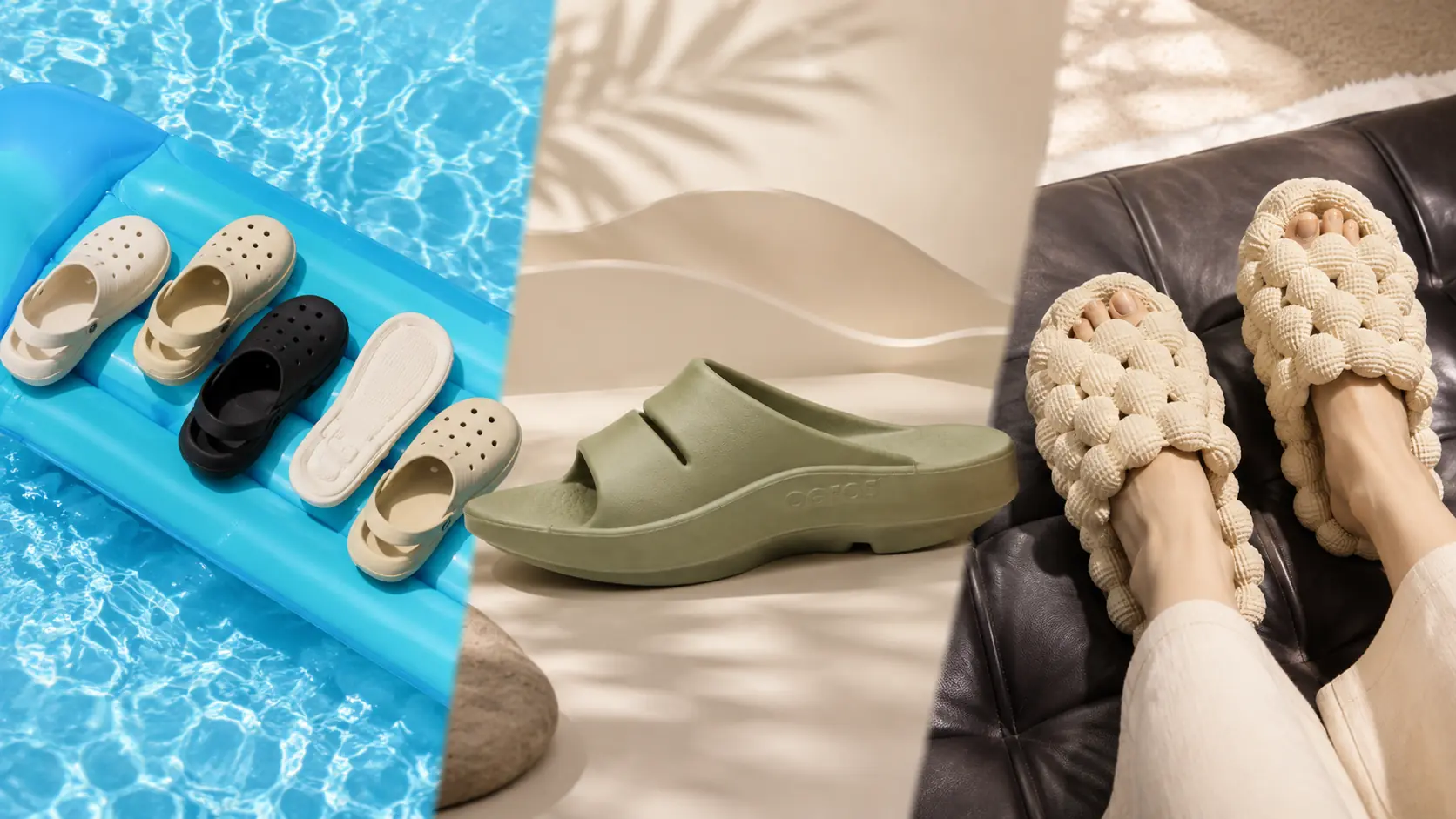
Recovery Slides vs Regular Slides: What’s the Difference?
They look nearly identical on the shelf. On your feet, after a long day, they are completely different products. Here is what recovery-specific design actually changes — and when it is worth it.
Put a recovery slide and a regular slide side by side and you’d be forgiven for shrugging. Same silhouette. Same foam-ish look. Sometimes the same colours. Then you wear both for a week — and suddenly one of them feels like a product and the other feels like a promise your feet actually get to keep.
Two slides, one big difference
A regular slide is built around one question: is it comfortable to put on? A recovery slide is built around a different one: what state are your feet in when you reach for it? That single design assumption — that the wearer’s feet are tired, loaded, and possibly a little swollen — changes almost every construction decision underneath you.
What recovery-specific design actually changes
| Element | Regular slide | Recovery slide |
|---|---|---|
| Footbed shape | Mostly flat | Contoured: arch dome, heel cup |
| Foam job | Feel soft at first touch | Absorb impact, hold shape under load |
| Midsole geometry | Uniform slab | Often rockered to roll you through steps |
| Durability target | A season of casual wear | Daily post-activity use without pancaking |
| Fit assumption | Neutral, fresh feet | Warm, swollen, fatigued feet |
The materials tell the story too. Most regular slides are simple EVA foam — light, cheap, and pleasant. Recovery brands either tune that EVA into shaped, denser footbeds or use proprietary compounds like OOfoam designed to absorb impact rather than bounce it back into tired joints.
When recovery-specific design is genuinely worth it
- You run, train, or spend long shifts standing all day — your feet arrive home genuinely fatigued.
- Your arches or heels complain in the evening, or bark on the first steps out of bed.
- You’ve noticed flat, soft slides feel great for minutes and worse after an hour.
- You want one dependable pair for the daily trainer-to-sofa transition.
When a regular slide is honestly fine
Grabbing the post, padding around on carpet, pool days, guests — if your feet aren’t arriving tired, a shaped recovery footbed is a luxury, not a need. Plenty of everyday comfort slides handle light duty brilliantly. The mistake isn’t owning regular slides; it’s asking them to do a recovery slide’s job every single evening.
Quick FAQ
Can a regular slide “become” a recovery slide with an insole?
Rarely well. Most slides don’t have the depth to hold an orthotic securely, and a loose insole in an open shoe tends to migrate. Buy the shape built in.
Is “recovery” on the label a guarantee of support?
No — it’s marketing language, not a standard. Check for a visible arch contour and heel cup. Our tested roundup separates the genuine articles from the renamed flat foam.