
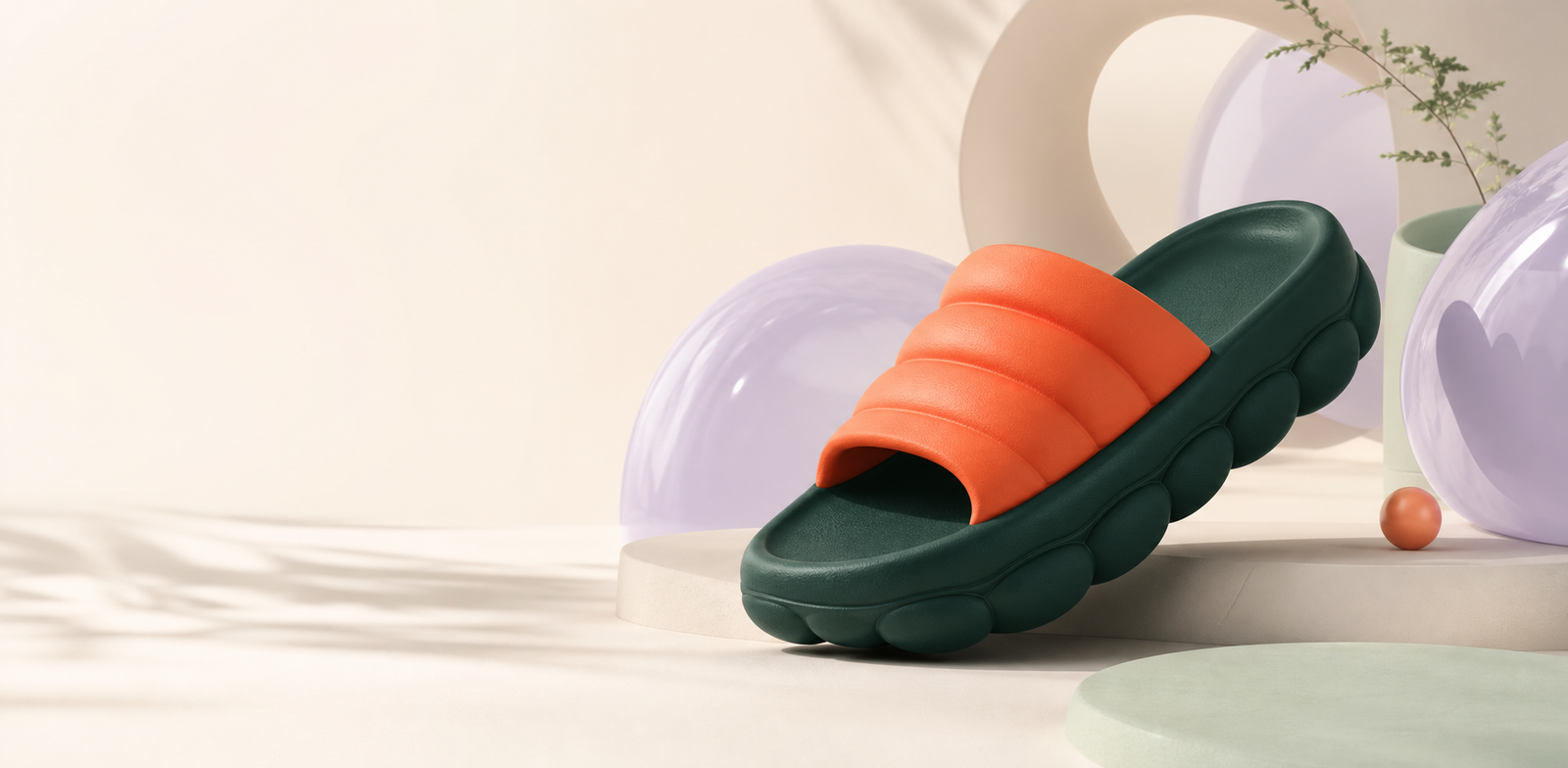
Can You Wear Bubble Slides to the Gym?
Bubble slides are comfortable, but wearing them to the gym is a bad idea for most activities. Here’s exactly when they’re fine, when they’re not, and what to wear instead.
Meta description: Bubble slides are comfortable, but wearing them to the gym is a bad idea for most activities. Here’s exactly when they’re fine, when they’re not, and what to wear instead.
Target URL: /guides/can-you-wear-bubble-slides-gym/ Category: Guides Read time: ~5 min Last updated: June 2026
Independent, reader-supported reviews. Some links may earn us a commission. How we stay unbiased ↗
Bubble slides have become one of the most popular casual footwear items of the last few years — soft EVA foam construction, no laces, easy to slip on, and genuinely comfortable for everyday wear. It makes sense that people want to wear them everywhere, including the gym.
The honest answer is: it depends on what you’re doing at the gym, but for most workout activities, bubble slides are a bad choice. Here’s why.
When Bubble Slides Are Fine at the Gym
Walking to and from the gym. Bubble slides are comfortable for walking short distances. If you’re using them to travel to the facility and change into proper workout shoes once you’re there, that’s perfectly reasonable.
In changing rooms and showers. This is exactly what slides are designed for. EVA foam doesn’t absorb water well, dries quickly, and provides a sanitary barrier between your feet and shared surfaces. This is the most appropriate gym use of slides.
Light stretching or yoga (on a mat). If you’re doing seated or supine stretching on a mat where your feet are mostly stationary, slides are fine. You’re not loading the footwear mechanically.
Recovery sessions after a workout. Some people bring slides specifically to wear post-workout — the cushioning and ease of putting them on makes them good for the walk to the car or the cooldown period.
When Bubble Slides Are a Problem at the Gym
Weightlifting. This is the most common issue. Lifting — squats, deadlifts, leg press, Romanian deadlifts — requires a stable, flat, firm surface underfoot. The thick, soft EVA foam in bubble slides is the opposite of this. When you lift, you need to feel the floor and maintain ankle stability. Soft foam compresses unevenly under load, causing your foot to roll subtly with each rep, which loads your ankle and knee joints incorrectly. Under heavy weight, this is a meaningful injury risk.
Running or cardio equipment. Bubble slides don’t have a secure heel counter or any mechanism to keep the shoe on your foot during dynamic movement. On a treadmill, they can slip off, catch on the belt, or cause you to trip. Most gyms prohibit open-toed or backless footwear on cardio equipment for exactly this reason.
Box jumps or plyometrics. Any exercise involving jumping, landing, or rapid direction changes requires footwear that’s secured to your foot. Slides are unsecured. The risk of the slide slipping out mid-movement is real.
HIIT classes or group fitness. Class formats with dynamic movement, jumping, or lateral movement have the same problem. You also risk distracting or injuring others if footwear comes off unexpectedly.
Machines with foot pads. On leg press, hack squat, or similar machines, the foot pad applies direct pressure to the sole of the slide. The soft foam can compress and shift, changing your foot position mid-set.
Why Gym Staff May Ask You to Leave
Many gyms have explicit policies about footwear — typically requiring enclosed toe and heel, adequate sole support, and secure fit. Bubble slides fail on the heel criterion (open back) and often on the sole-support criterion.
If a gym employee asks you to put on proper footwear or leave, they’re usually citing both safety policy and insurance requirements. Gyms are liable for injuries that occur on their premises, and unsecured open-backed footwear during exercise is a recognized risk factor.
If you’re unsure, check your gym’s footwear policy before arriving in slides.
The Case for Gym-Specific Slides
There’s a category of slides designed specifically for gym and athletic use — these are different from bubble slides and worth distinguishing:
Athletic slides (Adidas Adilette, Nike Benassi, Nike Victori): These have flatter, firmer soles designed for walking on hard surfaces, not soft-foam cushioning. They’re what many athletes wear in locker rooms and between warm-ups. They’re not for lifting either, but they’re more appropriate for gym-facility use than bubble slides.
Recovery slides (OOFOS, Hoka Ora): These are specifically designed for post-workout use — softer, more impact-absorbing foam to reduce load on fatigued feet. Athletes bring these to change into immediately after training. This is the most legitimate gym slide category.
What to Actually Wear at the Gym
For weightlifting: A flat-soled shoe is ideal. Converse Chuck Taylors are the classic recommendation because the vulcanized rubber sole is completely flat and provides excellent floor feel. Dedicated lifting shoes (Vans Sk8-Hi, Nike Romaleos, Adidas Powerlift) are better for heavy compound lifts. Cross-trainers also work.
For running: Running shoes with adequate cushioning and a secured heel counter. The opposite of what bubble slides offer.
For group fitness / HIIT: Cross-trainers or training shoes with lateral support. Shoes with a wide, stable base.
For the locker room / shower: Your bubble slides are actually perfect here.
The Bottom Line
Bubble slides are great footwear for casual wear, the commute to the gym, and changing room use. They’re not appropriate for actual exercise — particularly weightlifting, cardio equipment, or any activity with dynamic movement. The soft, unsecured, open-backed design is comfortable for walking but actively problematic under load or during movement that requires foot stability.
Keep them for before and after. Bring proper workout shoes for everything in between.
Written by the Bubbleglider team. Some links above are affiliate links — we earn a small commission if you buy, at no extra cost to you. This never affects our scores or recommendations. Read our full disclosure ↗