
Slipper Socks vs Cloud Slippers — Which Is Actually Better at Home?
A proper head-to-head across grip, warmth, hygiene, cushion, durability, and price. The answer isn’t the same for everyone.
Slipper socks and cloud slippers are both positioned as comfortable home footwear. They’re both cheap enough that most people own one without much deliberation. But they’re genuinely different products that perform differently across the variables that actually matter: grip on floors, warmth, hygiene, durability, and whether they’re appropriate for extended wear.
This is a proper head-to-head. The answer isn’t the same for everyone, and we’ll explain exactly which category suits which use case.
What We Mean by Each
Slipper socks: A textile sock (usually knit cotton, acrylic, or a blend) with a rubberised or silicone grip pattern applied to the sole. No separate sole component. The entire structure is the sock. Washing: machine washable. No structural outsole.
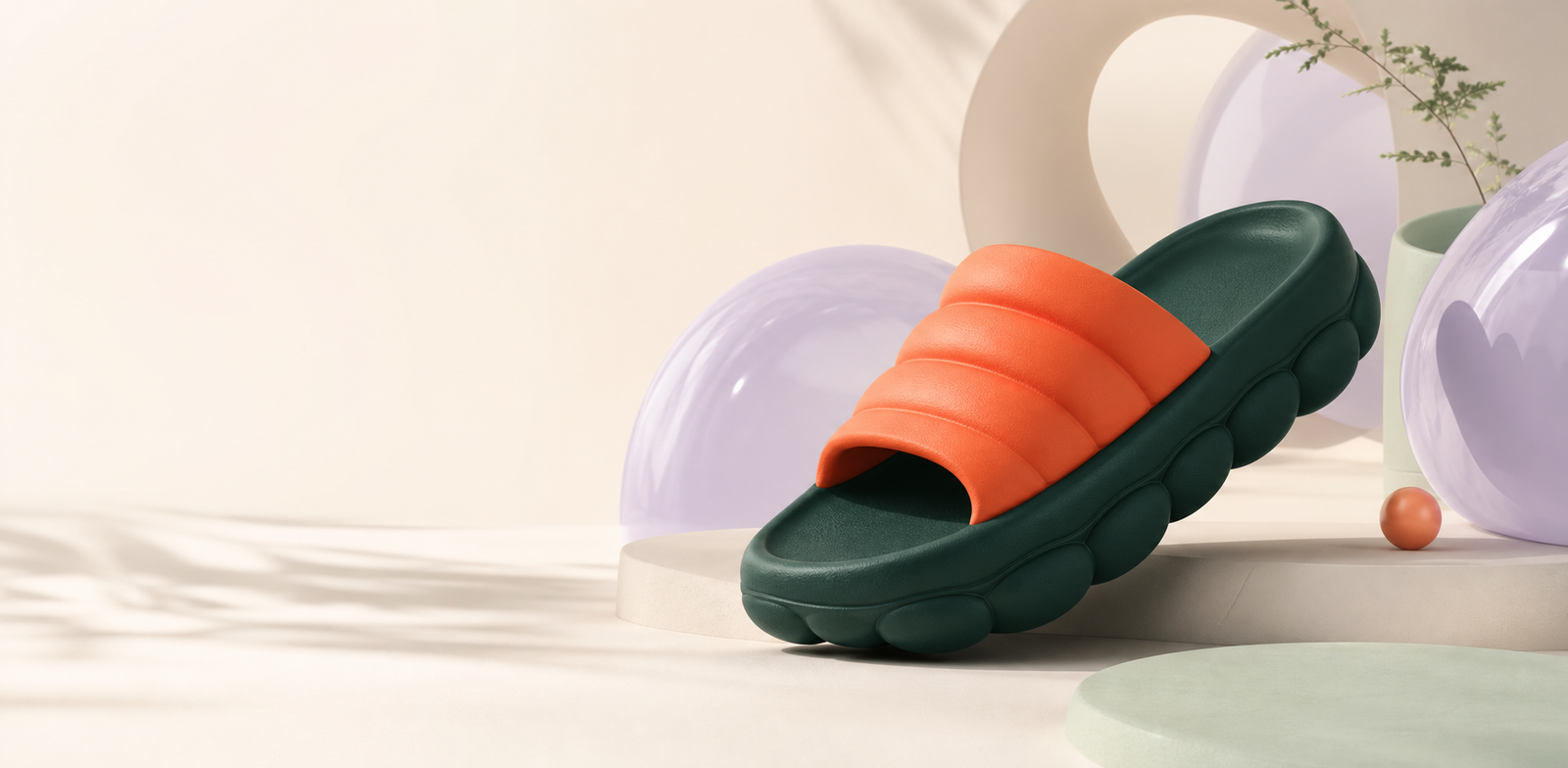
Cloud slippers: EVA foam slides or mules with a lychee-ball (bubble) texture footbed. Structured sole and footbed. Worn over bare feet. Not machine washable in most cases. Brands: BRONAX, Cheval, Afellicy, Mukinrch.
These two categories are marketed to overlapping audiences but are structurally quite different. Most of the comparison points below reflect genuine differences in material and construction, not just marketing.
Round 1: Grip and Safety
Slipper socks: The rubberised grip pattern on the sole is effective on dry surfaces. On a dry wood floor, a well-made gripper sock provides reliable traction. The limitation is wet surfaces: when the fabric of the sock absorbs any moisture (from bathroom tiles, kitchen spills), the grip performance drops sharply. A wet sock on a wet tile floor has essentially no friction.
Cloud slippers: EVA soles are smoother than gripper socks on dry surfaces, but the structured sole keeps the contact area consistent regardless of moisture. On wet tile or bathroom floors, EVA performs better than a saturated slipper sock. The exception is thin EVA on wet polished surfaces, where grip is limited for both categories.
Winner: Context-dependent. Slipper socks win on dry carpet and wood. Cloud slippers win on tile, bathroom surfaces, and anywhere moisture is possible.
Round 2: Warmth
Slipper socks: Direct contact with the foot along the entire surface area. Knit construction traps warm air inside the sock. On carpeted floors, slipper socks are warmer than open-sole slippers because the full foot is enclosed in insulating material. On cold tile or stone, the thin sole transfers cold upward with minimal barrier.
Cloud slippers: The EVA footbed sits between the foot and the floor. A 10–12mm EVA layer is a meaningful thermal barrier — better than a sock on cold tile. However, the foot surface above is exposed on open-toe slide designs, which loses warmth that a sock retains.
Winner: Slipper socks on carpeted surfaces; cloud slippers on tile and stone. If your home is carpeted, slipper socks are warmer. If you have tile or wood floors, the EVA sole of a cloud slipper provides better insulation against the floor.
Round 3: Hygiene
Slipper socks: Machine washable. This is the clearest advantage over cloud slippers. A slipper sock can be washed every 1–2 weeks without degradation. At typical use, the interior of a worn slipper sock accumulates significantly fewer bacteria and fungi than a non-washable alternative because cleaning is easy.
Cloud slippers: Not machine washable in most cases. The EVA foam can be rinsed under cold water, but it cannot be laundered the way a textile can. The interior of a cloud slipper worn daily accumulates skin cells and sweat in the foam surface. This is not dangerous under normal use but it is measurably less hygienic than a regularly-washed textile sock.
Winner: Slipper socks, slearly. The ability to machine wash is a meaningful hygiene advantage. If this matters to you — and it should for daily use — slipper socks are the more hygienic choice by a significant margin.
Round 4: Cushion and Comfort
Slipper socks: No dedicated footbed. The cushion comes from the sock material itself (usually 2–5mm of fabric thickness) and the floor surface beneath. On carpet, this is adequate. On hard floors, there is minimal cushion between the foot and the surface. Extended standing in slipper socks on hard floors is noticeably less comfortable than standing in cloud slippers.
Cloud slippers: The EVA footbed — typically 10–15mm — provides substantial cushion. The lychee-ball texture distributes pressure across many small contact points rather than the whole foot surface, which many people find more comfortable than a flat foam footbed. For prolonged home use (cooking, working from home standing), cloud slippers are significantly more comfortable on hard floors.
Winner: Cloud slippers, clearly. The EVA footbed has no equivalent in a slipper sock. If cushion matters — and for extended wear it does — cloud slippers win this round without contest.
Round 5: Durability
Slipper socks: Textile wears, pills, develops holes in the heel and toe, and loses elasticity. A well-made gripper sock lasts 6–18 months of regular use before degrading noticeably. Budget versions last 3–6 months. The grip pattern (usually silicone) outlasts the fabric in most cases.
Cloud slippers: EVA foam compresses permanently over time. Budget brands (BRONAX, PLOVELXN) compress to a noticeably flat state in 9–14 months of daily use. Mid-range brands (Cheval) last 12–18 months. The upper is typically more durable than the foam.
Winner: Similar overall, with different failure modes. Slipper socks fail in the textile; cloud slippers fail in the foam. At comparable price points, durability is roughly equivalent. Budget EVA slippers compress; budget slipper socks develop holes. Both need replacing at 6–12 month intervals with daily use.
Round 6: Portability and Versatility
Slipper socks: Lightweight, packable, can be worn in a bag for travel or visits. Can function as regular socks at a push. Easy to slip on or off — no need to remove and locate like a separate slipper.
Cloud slippers: Bulkier. Not suited to travel packing. But can be worn for a quick step outside (bins, garden in dry weather) in a way that a slipper sock cannot.
Winner: Slipper socks for travel and portability; cloud slippers for outdoor versatility.
Round 7: Price
Slipper socks: £3–12 for a single pair (or multipack). The cheapest warm-foot solution available.
Cloud slippers: £14–30 for a quality budget brand (BRONAX, Cheval). More expensive than slipper socks but still inexpensive in absolute terms.
Winner: Slipper socks. At 3–5x cheaper, slipper socks win on pure price — especially given similar lifespan.
Overall Comparison
| Category | Slipper socks | Cloud slippers | Winner |
|---|---|---|---|
| Grip (dry surfaces) | Very good | Good | Slipper socks |
| Grip (wet/tile) | Fair | Good | Cloud slippers |
| Warmth on carpet | Very good | Good | Slipper socks |
| Warmth on tile/stone | Fair | Very good | Cloud slippers |
| Hygiene | Excellent | Good | Slipper socks |
| Cushion / comfort | Fair | Excellent | Cloud slippers |
| Durability | Good | Good | Tie |
| Portability | Excellent | Fair | Slipper socks |
| Price | Excellent | Good | Slipper socks |
Who Should Choose Slipper Socks
- You have primarily carpeted floors
- Hygiene and washability are a priority
- Budget is a significant constraint
- You travel frequently or want slippers you can pack
- You wear them for short periods (watching TV, morning routine) rather than extended use
Who Should Choose Cloud Slippers
- You have tile, stone, wood, or laminate floors
- You stand at home for extended periods (working from home, cooking)
- The cushion feeling — specifically the lychee-ball texture — is part of the appeal
- You need slip resistance on wet bathroom and kitchen floors
- You want something you can wear briefly outside
Can You Use Both?
Yes, and many people do. Slipper socks for bedroom use (warm, hygienic, easy to wash), cloud slippers for kitchen and bathroom use (better grip on wet surfaces, better cushion on hard floors). At the prices involved, owning both categories is entirely reasonable.
The use-case split is: slipper socks for soft surfaces and short use, cloud slippers for hard surfaces and extended wear.
Written by the Bubbleglider team. Some links above are affiliate links — we earn a small commission if you buy, at no extra cost to you. This never affects our scores or recommendations. Read our full disclosure ↗